
Several free plant identification apps can enhance your urban foraging experience. iNaturalist offers community verification, while PlantNet works offline with over 46,000 species. Wild Edibles Lite focuses specifically on edible plants with recipes included. Always verify your findings across multiple sources since apps can sometimes confuse toxic lookalikes with edible plants. Remember to check local regulations before harvesting. These digital tools connect you with nature while providing essential safety information for your foraging adventures.
Why Plant ID Apps Are Essential For Urban Foragers
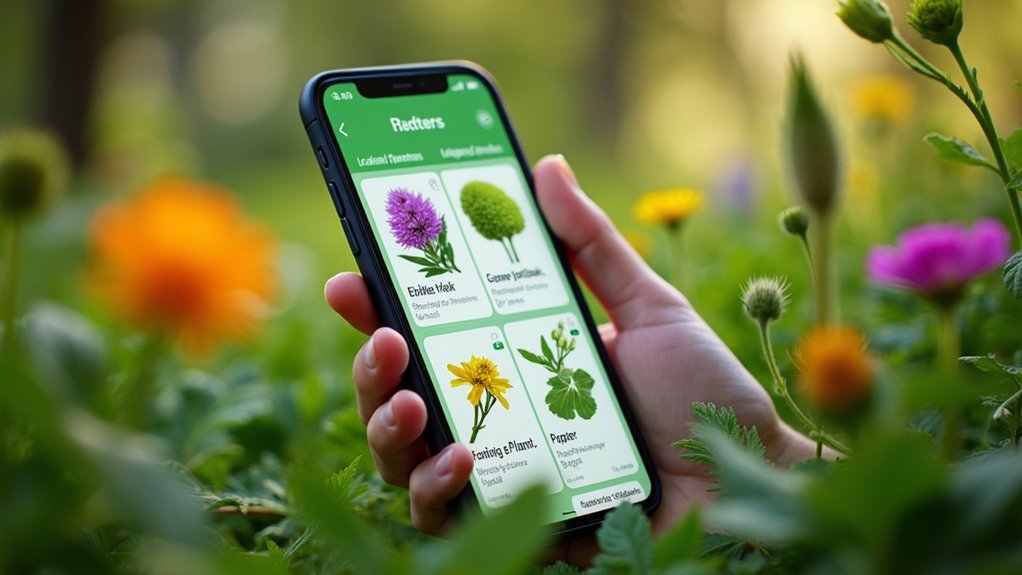
In the ever-growing urban jungle, plant identification apps have become indispensable tools for city foragers seeking to reconnect with nature's bounty.
These digital field guides provide immediate access to extensive plant databases, allowing you to quickly identify potential edibles with confidence.
You'll gain valuable insights about local species distribution and edibility, helping you make safer choices while exploring your concrete ecosystem.
The educational content enhances your understanding of plant morphology and habitat requirements, turning casual walks into learning opportunities.
However, apps can occasionally provide incorrect identifications, potentially leading users to dangerous conclusions about edible plants, which underscores the importance of using multiple identification methods before consuming wild plants.
Top Free Apps For Identifying Edible Urban Plants
When venturing into urban foraging, which apps will actually help you identify edible plants safely and accurately? Five standout options deserve your attention.
iNaturalist offers community verification to guarantee you're correctly identifying plants, with others confirming your finds in real-time.
PlantNet works offline with over 46,050 species, perfect for areas with poor connectivity.
For beginners, Wild Edibles Lite focuses specifically on temperate zone edibles and includes helpful recipes.
PlantSnap not only identifies plants but provides care tips if you're interested in growing your finds.
For those exploring diverse environments, Edible and Medicinal Plants covers 110 global species with important cautions about usage.
Each app offers advantages over traditional field guides by providing immediate identification when you're standing before an unfamiliar potential food source. The recent iOS update includes a convenient plant ID feature that allows you to quickly identify plants directly through your iPhone's camera app.
How To Verify Your Plant Identifications For Safety
While plant identification apps offer convenience for foragers, they shouldn't be your only safeguard against potentially dangerous misidentifications.
Even the most accurate apps like PictureThis can confuse toxic plants with edible lookalikes. Always cross-check your findings with multiple sources.
Reference traditional field guides that detail specific plant characteristics not captured in photos. Examine all parts of the plant—leaves, stems, flowers, and habitat—as apps often miss vital diagnostic features.
Join plant enthusiast communities where experienced foragers can verify your identifications. For absolute certainty with unfamiliar species, consult botanical experts.
Remember that similar-looking plants like poison hemlock and Queen Anne's Lace can lead to dangerous outcomes. Proper botanical identity verification is critical for safety when foraging, as closely related species may appear similar but possess different toxicity levels.
Never consume any foraged plant without 100% certainty of its identity and edibility status.
Leveraging Community Knowledge Through Social Plant ID Platforms
Beyond traditional identification methods, social plant ID platforms offer a powerful tool for foragers seeking collective wisdom. When you use apps like iNaturalist or PictureThis, you're not just accessing a database but tapping into a vibrant community of fellow enthusiasts and experts. The risk of plant misidentification can be significantly reduced with these apps, as they provide crucial safeguards against poisonous plants during foraging expeditions.
| Platform Feature | Benefit | Example |
|---|---|---|
| Community Verification | Enhanced accuracy | Expert botanists confirming identifications |
| Project Participation | Collaborative learning | Joining local biodiversity surveys |
| Personal Collections | Track your findings | Building your own foraging catalog |
| Real-time Feedback | Immediate corrections | Getting quick responses on uncertain species |
These platforms connect you with broader foraging communities across social media, creating networks where you can share discoveries and learn from others' experiences. This collective input helps validate identifications, ensuring greater safety and confidence in your foraging adventures.
Offline Capabilities For Foraging In Urban Green Spaces
When you're foraging in urban parks and green spaces, you'll need reliable plant identification tools that work without a data connection.
Your phone can become an emergency identification assistant with apps like PlantNet that store extensive databases locally for offline use.
These network-free solutions offer specialized city park guides that help you safely identify edible plants even in cellular dead zones.
The app should also include comprehensive safety guidelines to help foragers avoid poisonous look-alike plants while exploring urban environments.
Emergency Plant Identification Tools
How prepared are you for identifying plants when your phone loses signal in an urban green space? While apps like PlantNet can work offline once downloaded, you'll need additional tools for emergency identification when technology fails.
For reliable offline plant identification:
- Carry a pocket field guide specific to your region – these physical resources don't need batteries and contain vital sensory details apps miss.
- Download content from apps like Wild Edibles Forage before heading out to guarantee access without signal.
- Memorize key identifying features of common edible plants in your area. Even in emergency situations, always follow the primary rule to never consume plants unless you are 100% certain they are safe to eat.
Network-free Urban Identification
Urban green spaces offer abundant foraging opportunities, but you'll need reliable offline identification tools since network coverage can be spotty even in cities.
Apps like PlantNet store portions of their databases locally, enabling basic plant identification without internet connectivity.
When selecting an offline app, prioritize those with substantial local databases and high-quality image recognition. PlantNet stands out with its offline capabilities and ad-free interface.
While offline modes typically offer limited features compared to connected versions, they're still valuable for preliminary identification. Always ensure you have permission before foraging on private property and avoid areas with potential chemical exposure.
Remember that offline apps shouldn't be your only resource. Always verify findings with multiple sources before foraging, especially in urban areas where pesticide exposure is common.
Respect property boundaries and harvest sustainably to preserve these urban resources for everyone.
City Park Foraging Guides
While venturing through city parks for foraging adventures, you'll benefit greatly from apps specifically designed with offline capabilities. These tools help you navigate park regulations while identifying safe edibles, even when cellular service is unavailable.
Before exploring urban green spaces, remember:
- Check local regulations first—most Chicago parks and Cook County Forest Preserves prohibit foraging without explicit permission.
- Download field guides by experts like Sam Thayer that work without internet connection.
- Save information about common urban edibles like mulberries, juneberries, and daylilies for quick reference.
Even with technology, consider joining guided tours led by local experts like Dave Odd. These experiences provide hands-on learning that no app can replace, ensuring you forage ethically and safely. City parks often contain a variety of edible wild greens that can provide unique flavors not found in commercial produce.
Beyond Identification: Apps That Teach Sustainable Harvesting
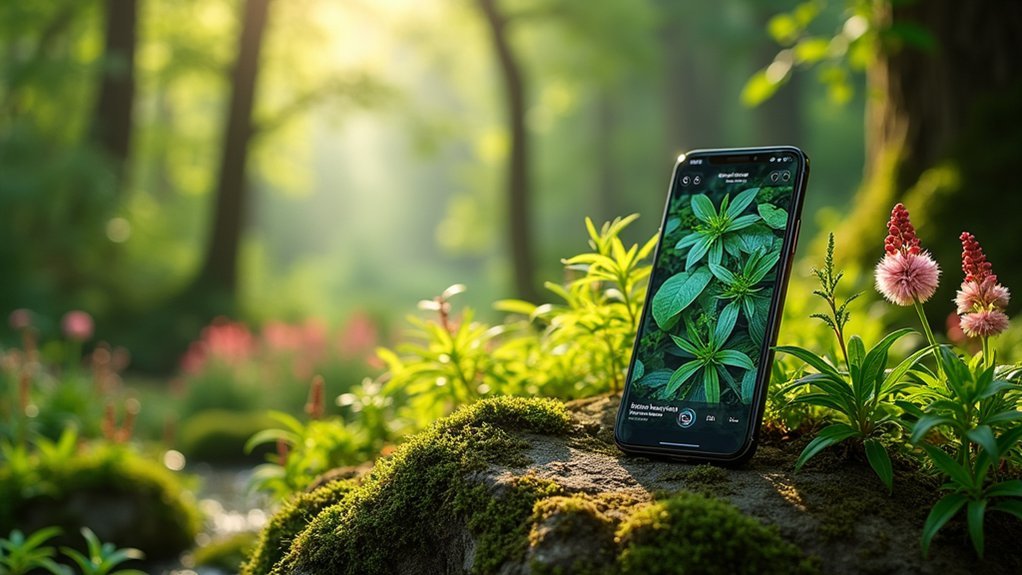
While identifying plants is the first step in foraging, the best apps also teach you how to harvest without harming ecosystems.
Many include seasonal calendars to show when specific plants are abundant and ready for sustainable collection.
You'll learn conservation principles that guarantee wild edibles remain available for future generations, respecting both nature and traditional foraging knowledge.
Apps like Wild Edibles Lite provide unique vegan recipes for each plant, helping foragers transform their finds into nutritious meals.
Ethical Harvesting Practices
Modern foraging apps now extend beyond simple plant identification to embrace ethical harvesting education. When you're out collecting wild edibles, these apps can guide you through sustainable practices that preserve ecosystems for future generations.
The best foraging applications incorporate ethical principles by teaching:
- Minimal impact techniques – showing you how to harvest only what you need while leaving enough for plant regeneration and wildlife.
- Seasonal awareness – alerting you to ideal harvesting times that allow plants to complete their reproductive cycles.
- Community responsibility – connecting you with local regulations and encouraging you to seek permission on private land.
These digital tools help transform casual foragers into environmental stewards who understand that ethical harvesting isn't just about what you take, but how you take it. Many apps include reminders to use proper cutting tools for cleaner cuts that minimize damage to the plant and promote healthier regrowth.
Seasonal Foraging Calendars
As seasons shift throughout the year, advanced foraging apps now offer dynamic calendars that transform how you interact with wild edibles.
These digital guides help you track what's available in your region during each season.
Spring reveals fresh shoots and wild garlic, while summer brings ripe berries and edible flowers in abundance.
Fall offers a bounty of fruits and nuts for collection, and even winter provides foraging opportunities with juniper berries and evergreen needles.
The best apps incorporate the "take some, leave some" principle, ensuring you'll harvest sustainably across all seasons.
They'll remind you to leave enough for wildlife and maintain ecological balance.
Consider connecting with local foraging communities through these platforms to gain regional insights on conservation practices appropriate for your area.
These platforms complement traditional resources with real-time identification features that can be especially helpful when you're uncertain about a plant's edibility in the field.
Conservation Through Education
Today's most innovative plant identification apps go beyond merely naming species, transforming into extensive educational platforms that promote conservation ethics.
These digital tools integrate sustainable harvesting practices with species identification, teaching you to forage responsibly while protecting fragile ecosystems. Recent evaluations show that apps like PictureThis achieved 73% accuracy in plant identification, making them increasingly reliable tools for foragers.
- Ethical harvesting guidelines accompany species information, showing you proper techniques that minimize environmental impact and guarantee plant populations continue to thrive.
- Community knowledge sharing connects you with experienced foragers who provide region-specific conservation advice through forums and discussion boards.
- Conservation status indicators alert you when a species is protected, rare, or vulnerable, preventing accidental harvesting of at-risk plants.
Comparing Accuracy Rates For Common Urban Wild Edibles
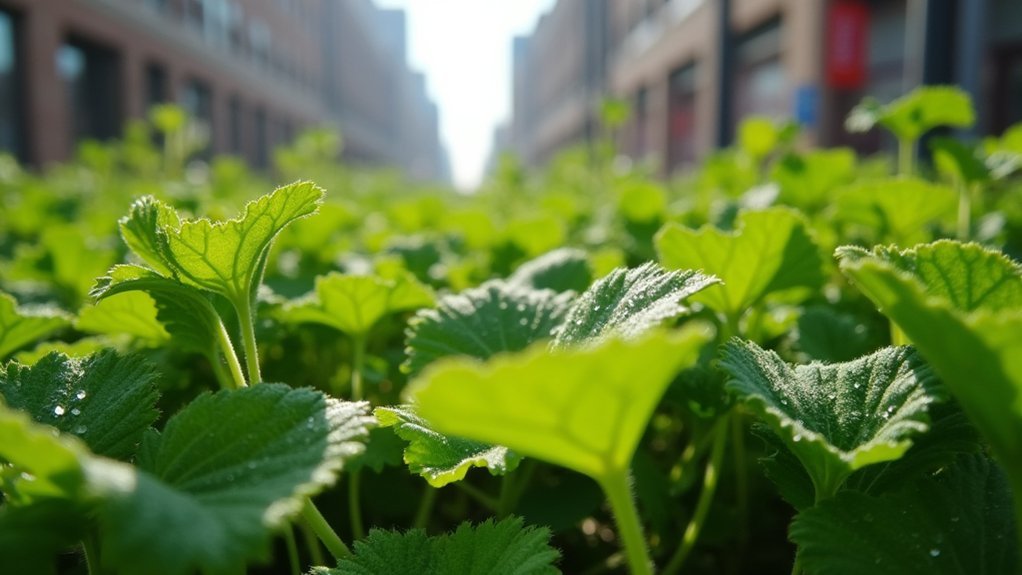
When foraging for wild edibles in urban environments, the reliability of plant identification apps can literally be a matter of life and death. Testing reveals troubling inconsistencies across platforms.
PlantNet sometimes identifies hogweed with only 36% confidence, while iNaturalist and Google Lens produce varying results depending on lighting and framing.
For common urban edibles like dandelion, chickweed, and mallow, accuracy varies considerably. While these apps might recognize cat's ear or sourgrass, they often miss vital details about habitat and soil conditions that determine safety. Experts emphasize that no app alone should be used as the sole source for identifying potentially edible plants.
Location-based features in iNaturalist Seek improve accuracy for region-specific plants, but no app matches traditional identification methods.
Remember that apps serve best as supplementary tools rather than definitive authorities, especially when foraging nutrition-rich wild plants from potentially contaminated urban soils.
Frequently Asked Questions
Can Plant ID Apps Detect Poisonous Look-Alikes of Edible Plants?
Plant ID apps can't reliably detect poisonous look-alikes. You'll need to verify their results with trusted sources. Don't rely solely on these apps for foraging safety—they're helpful but not foolproof.
Do These Apps Work With Partial Plant Specimens or Damaged Leaves?
Plant ID apps struggle with partial specimens or damaged leaves. You'll get mixed results as they need clear, complete features for accurate identification. Always cross-check with multiple sources when dealing with incomplete samples.
How Do Apps Handle Regional Variations of the Same Plant Species?
Apps handle regional plant variations through location-based filters, regional flora libraries, and user input. You'll often find settings to specify your region, which helps the database narrow down possible matches for more accurate identification.
Are There Apps Specifically Designed for Medicinal Plant Identification?
Yes, you'll find several apps specifically for medicinal plant identification, including "Medicinal Plant Identifier" and Bontwui SARL's app, which offers identification plus recipes and guidance for using herbs as natural remedies.
Can Apps Identify Plants at Different Growth Stages or Seasons?
Yes, plant identification apps can identify plants at different seasons, but you'll face challenges with early growth stages when plants lack distinct features. Don't rely on them exclusively for foraging—seasonal variations affect accuracy.
In Summary
You're now equipped to safely explore the edible plants in your urban landscape. Download a few of these free plant ID apps, but always cross-reference your findings and consult experienced foragers. With practice, you'll confidently identify common edibles and transform your neighborhood into a sustainable food source. Remember, technology is your ally, but it's your responsibility to forage ethically and safely.


Leave a Reply