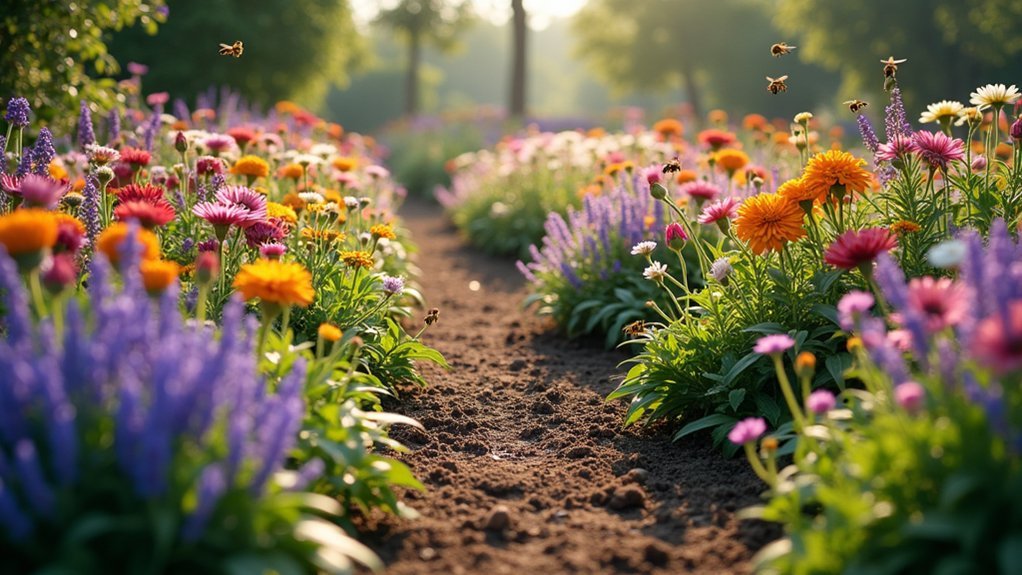
The 5 best honeybee paths through downtown include rooftop-to-park corridors creating aerial networks, diverse botanical routes with continuous blooming cycles, urban waterway corridors along bayou systems, commercial district paths with hidden rooftop gardens, and pollinator highways along transit lines. You'll find bees traveling up to three miles from hives, maneuvering efficiently between urban gardens using these strategic pathways. Discover how these invisible highways transform concrete jungles into thriving pollinator paradises.
5 Best Honeybee Paths Through Downtown Garden Networks
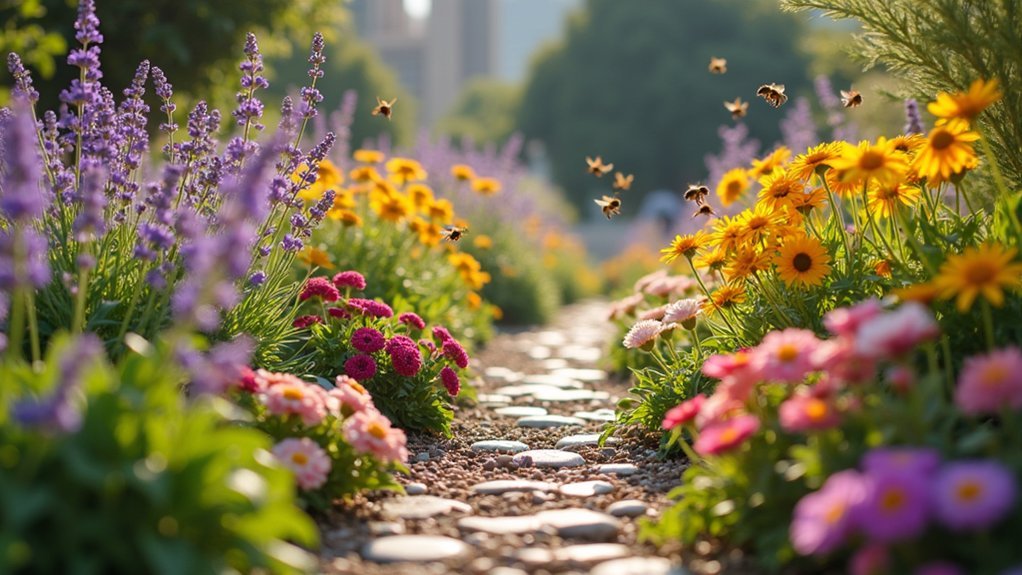
Navigators of the urban landscape, honeybees traverse Downtown Houston with remarkable efficiency, foraging up to three miles from their hives to access diverse food sources.
You'll find these honey bees thriving along established pollinator pathways that connect the city's rich network of urban gardens.
Downtown's garden diversity offers advantages over rural monocultures, with native plants and flowering plants providing continuous blooming cycles.
Unlike rural monocultures, Downtown's diverse gardens provide native plants with staggered blooming cycles that sustain pollinators year-round.
The strategic placement of managed hives enhances bee diversity and strengthens the entire ecosystem.
Your community involvement makes a difference—by maintaining pollinator gardens throughout Downtown, you're helping create corridors that support these industrious insects year-round.
These interconnected green spaces form crucial highways for honeybees, allowing them to maximize foraging efficiency while promoting biodiversity across Houston's urban core.
Rooftop-to-Park Corridors: Strategic Flight Paths for Urban Bees
The buzzing metropolis of Houston takes on new meaning when you consider the aerial networks formed by honeybees traveling between Downtown's rooftop hives and public parks.
These remarkable bees navigate up to three miles from their managed beehives, creating invisible highways of pollination.
You'll find pollinator corridors strategically designed along Houston's Light Rail, connecting urban gardens filled with diverse flowering plants.
Unlike rural monocultures, these varied environments offer bees expanded foraging opportunities throughout the seasons.
The thoughtful placement of wild pollinator habitats between rooftop gardens creates stepping stones for bee movement, enhancing biodiversity across the concrete landscape.
Diverse Botanical Routes: Maximizing Seasonal Nectar Sources
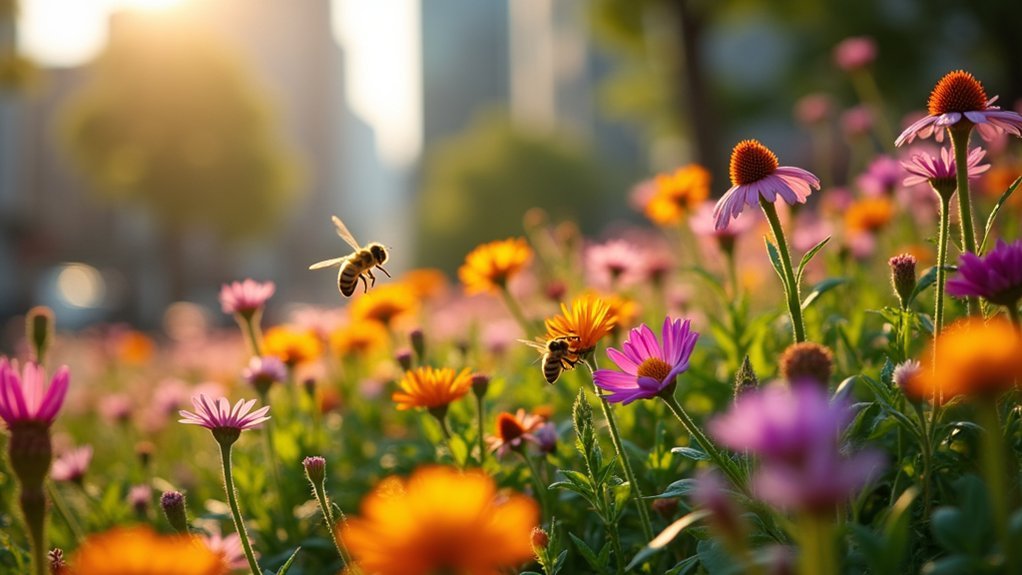
When considering urban bee populations, how do Downtown Houston's diverse botanical landscapes shape honeybee foraging patterns?
Downtown Houston's urban gardens create distinctive honeybee foraging networks through their surprising botanical diversity.
You'll find that urban environments offer surprisingly rich food sources for honeybees, who create impressive foraging routes extending up to three miles from their hives.
To maximize seasonal nectar sources, incorporate native plants like azure blue sage and giant goldenrod that bloom at different times throughout the year.
These pollinator pathways support not just honeybees but enhance overall biodiversity.
Strategic placement of hives near these diverse botanical routes guarantees efficient foraging, directly impacting your honey harvest quality.
Research shows that floral-rich gardens in urban settings greatly increase bee species abundance.
Urban Waterway Pollinator Highways: Following Bayou Gardens
Along Houston's winding bayou systems, honeybees have established remarkable navigation networks that function as natural highways connecting downtown gardens.
These urban waterway corridors offer essential pathways for bee populations as they forage across fragmented city landscapes. You'll find these pollinator highways bustling with activity thanks to strategic placement of diverse floral resources.
When exploring these vibrant ecological corridors, notice:
- Native species plantings that provide seasonal blooms, creating consistent nectar sources
- Flowering plants strategically placed along waterways to guide bees' navigation patterns
- Community-maintained pollinator gardens that form "stepping stones" of habitat, reducing foraging distances for bees
Commercial District Foraging Network: Hidden Oases Between Skyscrapers
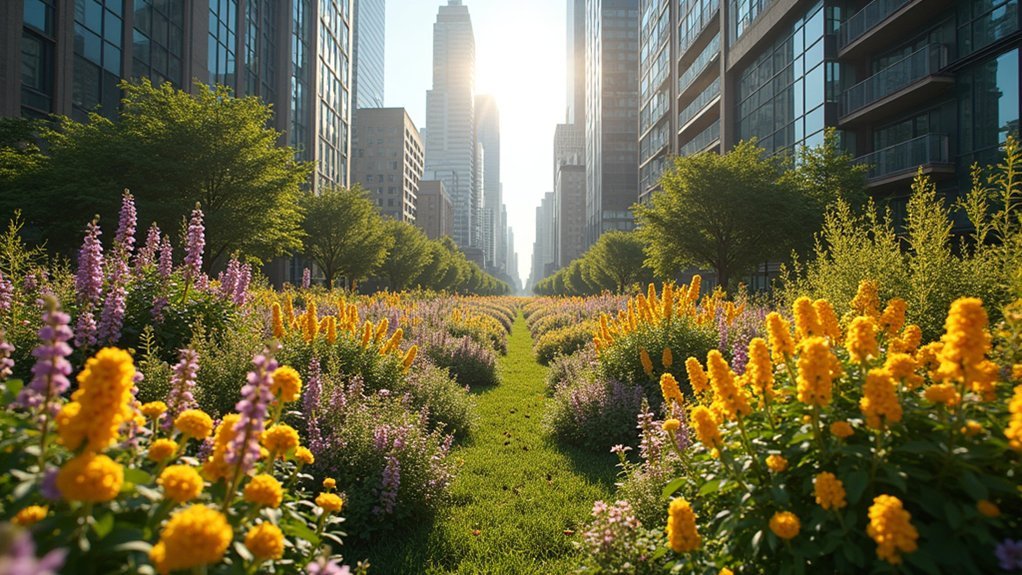
Beyond the bayou corridors, honeybees have established impressive foraging networks within downtown Houston's commercial district. You'll find strategic hive placements enabling bees to access diverse urban flora within three miles—often more nutritious than rural monocultures.
Look upward to discover hidden pollinator habitats in rooftop gardens atop skyscrapers, where bee colonies thrive. These elevated oases boost biodiversity while supporting substantial honey production. The harvested honey appears in local restaurants, strengthening community connections to native pollinators.
Throughout the district, carefully planned pathways along sidewalks and between buildings feature nectar-rich plants, creating insect highways in this concrete landscape.
Building tenants participate in educational workshops about urban beekeeping, learning how these small creatures maintain ecological balance despite urban challenges. These commercial district initiatives demonstrate how urban environments can actively support vital pollinator populations.
Frequently Asked Questions
Where Do Bees Thrive the Most?
Bees thrive most in urban environments like Downtown Houston where you'll find diverse flowering plants. They're thriving better than in rural monocultures because they can access varied pollen sources within their three-mile foraging range.
What Is the Best Land for Beekeeping?
Urban environments make the best land for beekeeping as you'll find diverse flowering plants that provide varied nutrition for your bees. Look for areas with minimal pesticide use within a three-mile foraging radius.
What Is the Best State to Raise Honey Bees In?
California is your best choice for raising honey bees, with 324,000 honey-producing colonies and a $30.9 million production value. New York and North Dakota follow closely, offering strong yields and beekeeper salaries.
Where Is the Best Place to Keep Bees?
You'll find rooftops in urban areas ideal for keeping bees, particularly if they're three miles from monocultures. Guarantee your hives receive adequate sunlight and wind protection while providing access to diverse flowering plants.
In Summary
You've now explored the ideal urban flight paths for our essential pollinators. As you implement these five honeybee highways in your community, you'll create resilient ecological corridors that support both urban biodiversity and honey production. Don't forget to map your own local variations, connecting fragmented green spaces into functional networks. Your efforts transform concrete jungles into thriving pollinator pathways that benefit everyone—bees and humans alike.




Leave a Reply