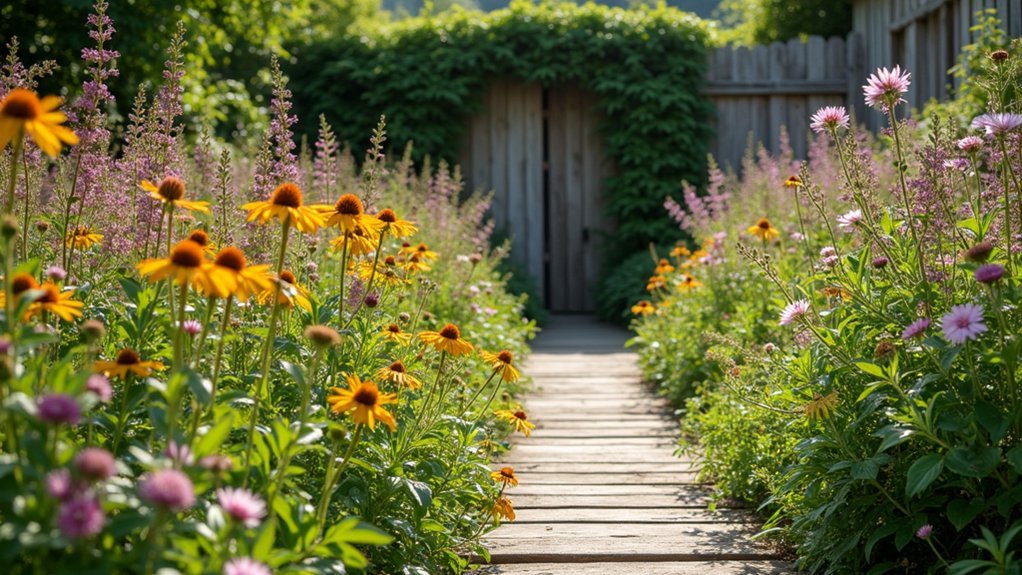
The 7 best native food gardens for pollinators include Three Sisters (corn, beans, squash), medicinal plant corridors, seasonal berry patches, edible flower gardens, native fruit tree guilds, Indigenous seed-saving sanctuaries, and continuous bloom gardens. You'll support local pollinators while growing nutritious food for your family through these traditional planting systems. Each design creates microhabitats that attract diverse beneficial insects and guarantees year-round support for bees, butterflies, and other essential pollinators in your ecosystem.
7 Best Native Food Gardens For Pollinator Communities
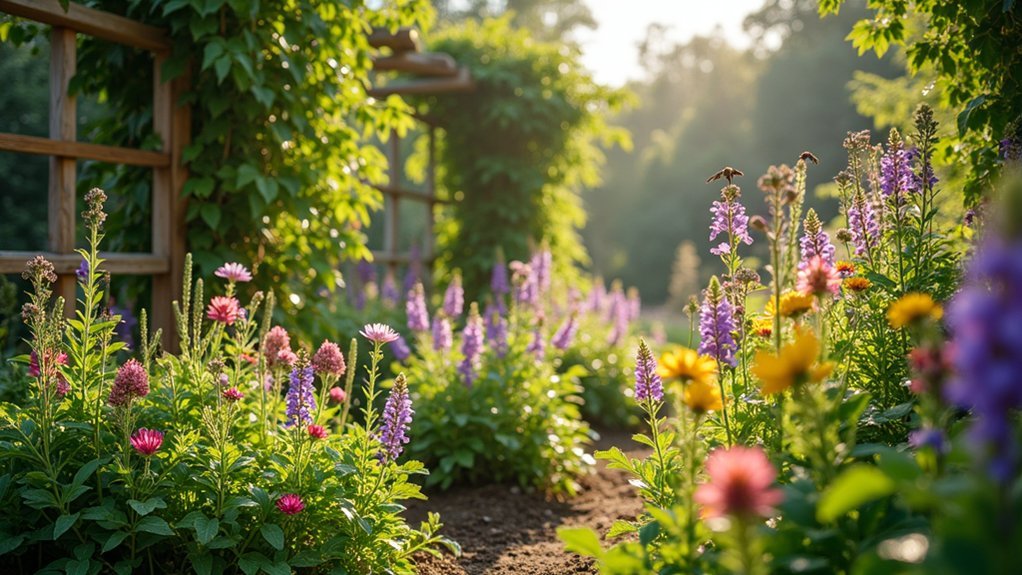
While many gardeners focus solely on crop yields, creating a native food garden that supports pollinators provides benefits far beyond your harvest basket. By incorporating plants like squash, cucumbers, and pumpkins, you'll create habitat for specialized squash bees that enhance pollination of these crops.
Native plants form the foundation of sustainable food gardens, providing essential food and shelter for local pollinator communities. Consider adding edible flowers such as nasturtiums and borage, which serve as vibrant nectar sources while beautifying your space.
Don't overlook native fruit trees like common persimmon and high-bush blueberries, which attract diverse pollinators while yielding nutritious harvests.
Planning for continuous blooms from spring through fall guarantees your garden remains a productive sanctuary that sustains both pollinators and your family throughout the growing season.
Three Sisters Garden: Corn, Beans, and Squash Symbiosis
Among the most powerful examples of ecological harmony in food gardening, the Three Sisters method stands as an ancient demonstration to agricultural wisdom.
When you plant corn, beans, and squash together, you're creating a self-sustaining ecosystem where each plant supports the others while attracting diverse pollinators.
- Tall corn stalks serve as natural trellises for climbing bean vines
- Beans fix nitrogen in the soil, nourishing all three plants without synthetic fertilizers
- Squash's broad leaves suppress weeds and retain soil moisture, creating ideal growing conditions
- Squash flowers attract specialized pollinators like squash bees, enhancing biodiversity
Medicinal Plant Corridors for Urban Pollinators
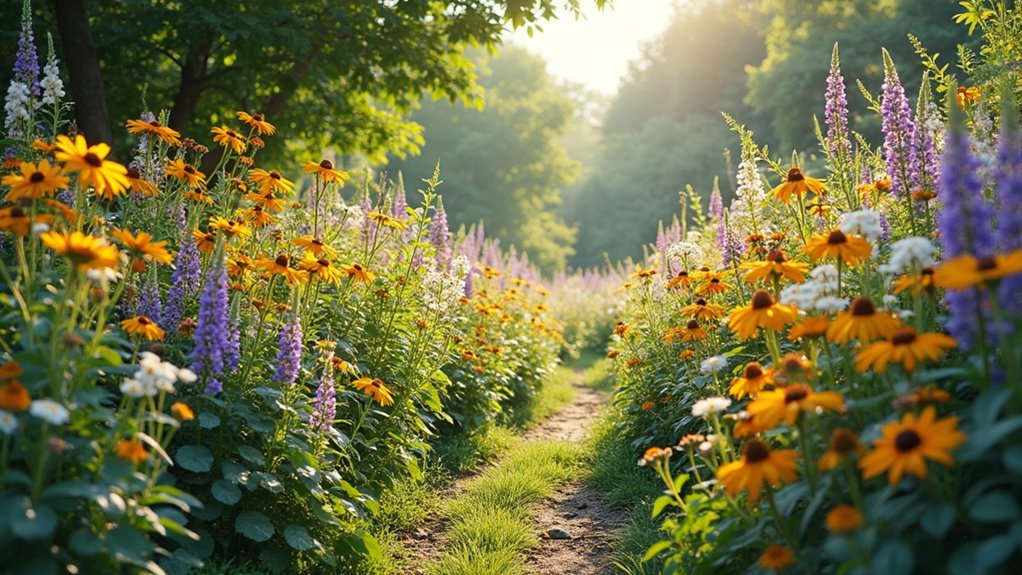
You'll transform urban spaces into healing pathways for pollinators by planting corridors of native medicinal plants like echinacea and bee balm.
These herbal havens create essential connections between fragmented green spaces, offering food sources and shelter throughout the growing season.
Your medicinal corridor won't just support dwindling pollinator populations—it'll boost overall biodiversity while providing your community with sustainable access to healing plants.
Healing Pathways Connect Cities
As cities expand and natural habitats shrink, urban medicinal plant corridors offer an innovative solution for reconnecting fragmented ecosystems. By establishing these healing pathways, you're creating essential connections between green spaces that allow native pollinators to travel, feed, and thrive throughout urban environments.
These interconnected corridors provide multiple benefits:
- Native medicinal plants like echinacea and elderberry support pollinator health while offering healing properties for your community.
- Food-producing gardens integrated with medicinal species create sustainable urban ecosystems.
- Corridor designs improve air quality and soil health across connected city areas.
- Community participation fosters education about pollinators' significant role in our food systems.
When you help develop these pathways, you're not just supporting biodiversity—you're creating a symbiotic relationship between urban dwellers and nature that enhances both environmental and human health.
Herbal Havens Boost Biodiversity
Herbal havens within urban landscapes serve as essential sanctuaries for pollinator communities while providing medicinal resources for residents.
By planting climate-adapted herbs like lavender and bee balm, you'll create sustainable spaces that require minimal water while attracting native pollinators and honeybees.
Echinacea, peppermint, and chamomile offer dual benefits—healing properties for humans and crucial nectar for diverse insect species.
These medicinal corridors effectively connect fragmented habitats across cities, allowing bees and other beneficial insects to travel and forage more successfully.
Your urban medicinal garden doesn't just support beneficial insects; it simultaneously improves air quality and soil health.
Seasonal Berry Patches for Year-Round Pollinator Support
Creating a seasonal berry patch offers one of the most effective strategies for supporting pollinators throughout the year.
Seasonal berry patches provide food continuously as different species bloom from early spring through late summer. When you plant native varieties like highbush blueberry, you're not just growing delicious fruits—you're establishing essential habitat that sustains pollinator populations.
- Blackberries, raspberries, and blueberries supply pollinators with nectar at different times, ensuring uninterrupted foraging.
- Native berry species are particularly valuable as they've co-evolved with local pollinator species.
- Your berry patch doubles as both food source and shelter for beneficial insects.
- Harvesting berries for your table creates a sustainable food system that benefits both humans and wildlife.
Edible Flower Gardens That Double as Pollinator Havens
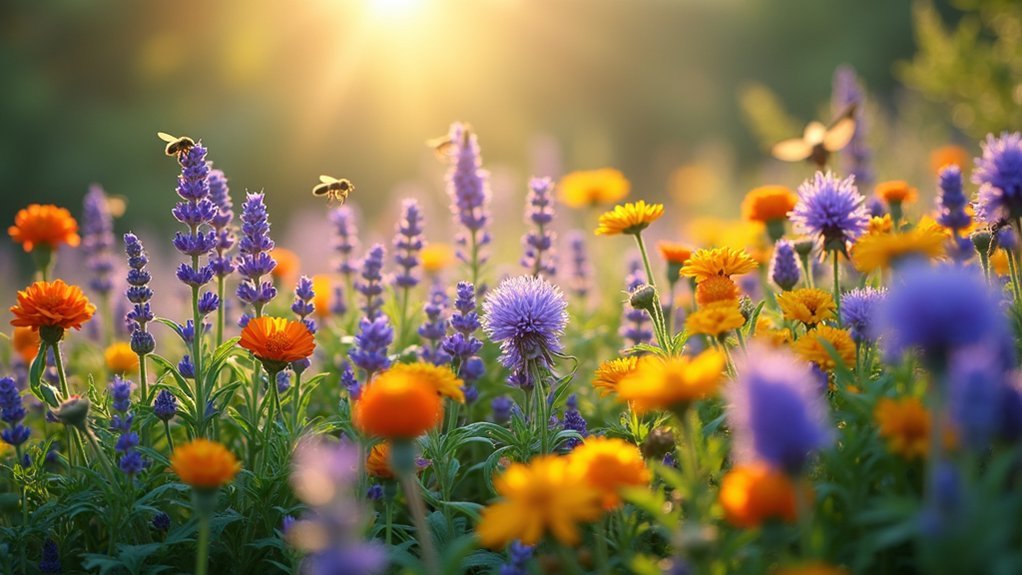
You'll discover that edible flower gardens create a perfect synergy between your culinary needs and pollinator habitats when you incorporate vibrant options like nasturtiums, calendula, and blue borage.
Your garden's productivity will increase as these tasty blooms attract bees, butterflies, and other beneficial insects that improve pollination rates for all your fruits and vegetables.
Tasty Blooms, Buzzing Friends
While many gardeners separate their edible and ornamental spaces, a garden filled with edible flowers offers the perfect blend of beauty, flavor, and ecological benefit.
You'll create a buzzing sanctuary that helps pollinators while harvesting delicious blooms for your kitchen.
When you plant a variety of flowering plants like nasturtiums, calendula, and borage, you're setting a diverse table for both yourself and beneficial insects:
- Continuous blooms provide nectar sources throughout the growing season
- Distinctive flavors enhance salads, garnishes, and culinary creations
- Natural attraction of bees and butterflies improves pollination of nearby crops
- Increased pollinator activity leads to better fruit and vegetable yields
This integrated approach creates a thriving ecosystem where both humans and pollinators benefit from the same colorful, tasty landscape.
Colors That Attract Pollinators
The colors you choose for your garden speak a secret language to passing pollinators, inviting them to stop and feast.
Blues, purples, yellows, and whites act as natural beacons for bees and other pollinators searching for nectar and pollen sources.
When creating a pollinator-friendly edible garden, incorporate vibrant nasturtiums, borage, and calendula—plants that serve both your plate and pollinators' needs.
Plant these edible flowers alongside your vegetables and herbs to enhance your garden's appeal and productivity.
Scatter wildflower seed varieties that bloom sequentially throughout the growing season to guarantee continuous nourishment for your buzzing visitors.
Research shows gardens with diverse colors attract more pollinators, increasing pollination rates for all your edible plants.
This strategic planting creates a beautiful, productive landscape while supporting essential pollinator communities.
Four-Season Edible Flowers
Creating a garden that blooms throughout the year requires strategic selection of edible flowers that not only please your palate but also sustain pollinator populations during critical seasons.
By incorporating native varieties, you'll create a resilient ecosystem that supports both your kitchen and local wildlife.
- Plant nasturtiums in summer borders to attract aphids away from vegetables while providing native bees with nectar and serving as host plants for caterpillars.
- Include calendula for spring and fall blooms that extend your growing season and provide continuous food sources when other plants aren't flowering.
- Add borage to vegetable beds to improve pollination rates while enjoying its cucumber-flavored blossoms in summer salads.
- Select regionally-adapted edible flowers that thrive with minimal irrigation, creating sustainable habitat that flourishes even during challenging weather conditions.
Native Fruit Tree Guilds for Maximum Insect Diversity
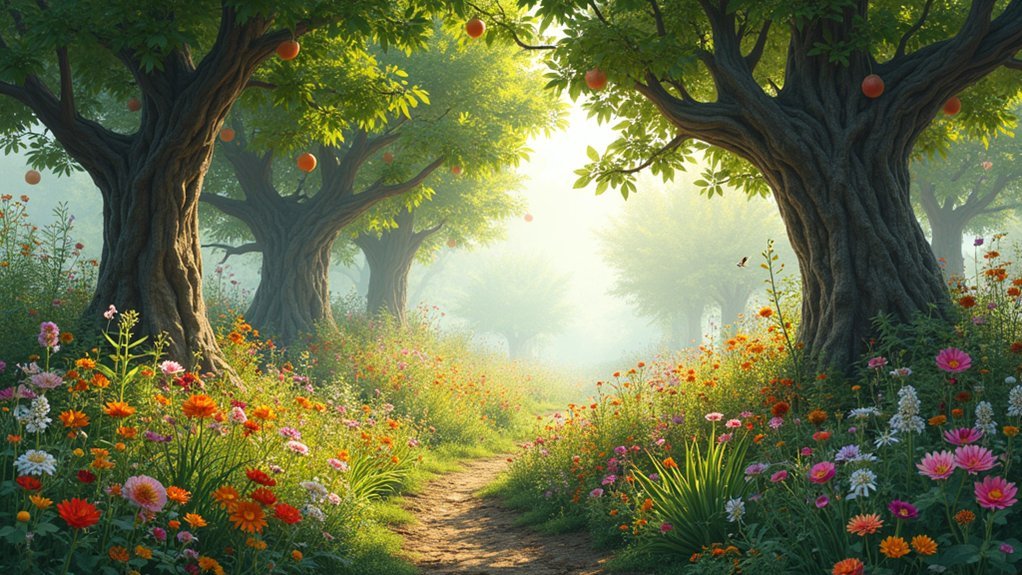
Designing fruit tree guilds with indigenous species transforms ordinary gardens into thriving ecosystems where pollinators flourish. By centering your guild around native trees like the common persimmon, you're providing essential vitamin-rich food for both wildlife and your family.
Indigenous fruit tree guilds transform backyards into vibrant ecosystems that nourish both wildlife and humans alike.
Native fruit tree guilds create biodiversity hotspots that attract and sustain numerous beneficial insects. You'll notice improved pollination rates as bees, butterflies, and other pollinators visit flowering companions throughout the growing season.
Understorying with regional wildflowers and complementary seed mixes guarantees continuous nectar sources from spring through fall.
The real magic happens when your guild establishes natural pest management—predatory insects move in to control pests, reducing your need for interventions.
Your garden becomes not just productive but resilient, supporting local ecology while rewarding you with abundant harvests.
Indigenous Seed-Saving Sanctuaries and Pollinator Hubs
Indigenous seed-saving sanctuaries represent a profound extension of native gardening practices, connecting ancestral wisdom with modern conservation needs.
By establishing these sanctuaries in your community, you're creating essential refuges where traditional seed varieties thrive alongside the pollinators that depend on them.
These sanctuaries function as living libraries of biodiversity, where you can:
- Preserve rare native plant genetics that have co-evolved with local pollinators
- Learn traditional cultivation methods that support healthy pollinator populations
- Participate in seed exchanges that strengthen community food sovereignty
- Create specialized microhabitats that provide food and shelter for diverse pollinator species
When you support indigenous seed-saving initiatives, you're not just protecting native plants—you're helping sustain the intricate relationships between plants and pollinators that have developed over thousands of years in your local ecosystem.
Frequently Asked Questions
How Do You Make a Native Pollinator Garden?
To make a native pollinator garden, you'll need to plant diverse native flowers that bloom throughout seasons, group them in clusters, add water sources and shelter, choose single-flowered varieties, and avoid using pesticides.
What Are the Best Plants for a Pollinator Garden?
You'll want to include milkweed for monarchs, purple coneflower, black-eyed Susan, bee balm, and wild bergamot. Don't forget native fruit plants like highbush blueberry and persimmon that provide food for both pollinators and you.
Are Native Plants Better for Pollinators?
Yes, native plants are better for pollinators. You'll find they provide more nutritious pollen and nectar that local pollinators have evolved with. They're also easier to maintain and support pollinators' complete life cycles.
What Vegetable Gardens Are Bee Friendly?
You'll attract bees with diverse vegetable gardens featuring cucurbits, flowering herbs like basil, and tomatoes. Include native plants such as milkweed, and guarantee continuous blooms from spring to fall for sustained pollinator support.
In Summary
By planting these seven native food gardens, you're not just growing food—you're creating essential habitat for pollinators. You'll notice more bees, butterflies, and beneficial insects visiting your space while enjoying fresh harvests. Your garden becomes part of a larger ecological network, preserving biodiversity and traditional knowledge. Each plant you nurture connects you to ancestral growing practices while ensuring these important relationships continue for generations to come.