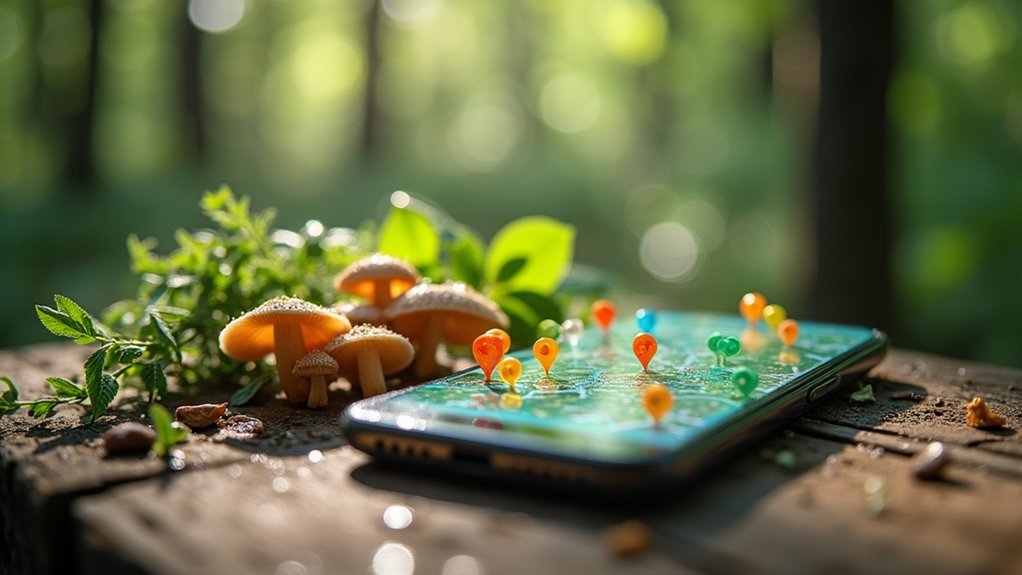
A successful foraging app combines robust plant identification technology with location-specific databases and offline functionality. You'll need GPS features for mapping productive spots and community tools for verification. Design must be intuitive with thumb-friendly controls and consistent visual elements. Don't overlook security—implement encryption and permission-based access while respecting local foraging regulations. Smart battery optimization and seasonal pattern recognition algorithms guarantee you're not left stranded. These essential features create an experience that transforms casual interest into skilled expertise.
Essential Features for Urban Foragers
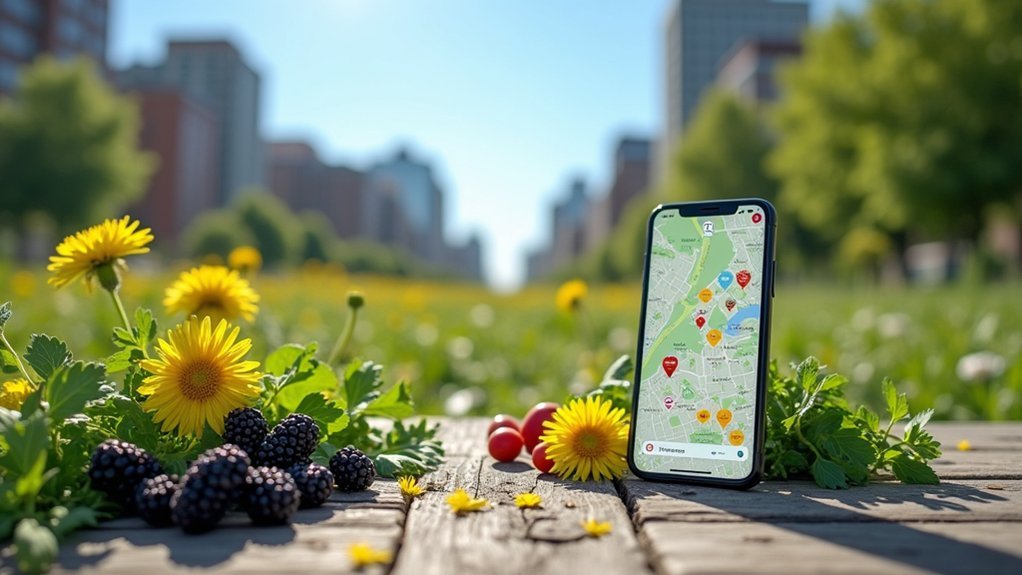
While foraging in urban settings presents unique challenges, a well-designed tracking app can transform your experience from frustrating to fruitful.
You'll need robust plant identification technology that accurately distinguishes edible species from toxic look-alikes found in city parks and green spaces.
Look for apps offering location-specific databases that highlight plants common to urban environments and provide safety guidance about avoiding polluted areas or spots treated with pesticides.
GPS functionality helps you map and return to productive spots, while community features connect you with fellow urban foragers who can verify identifications.
The best apps also include information on local regulations—crucial in cities where harvesting may be restricted—and sustainable practices to make certain urban ecosystems remain healthy despite increased foraging pressure. Following the example of Forager Diary, specialized tracking features can help you remember specific locations across numerous urban parks and trails.
User Experience Design Principles
Anyone can build a foraging app, but crafting one that users actually love requires thoughtful UX design principles. Your app must prioritize user-centric design by understanding foragers' specific needs through research and testing.
Success in foraging app design lies not in features, but in deeply understanding users through intentional research and testing.
Maintain consistency in visual elements and adhere to platform standards so users feel instantly familiar with your interface. Design intuitive navigation with clear signposting and thumb-friendly controls that make exploration effortless. The limited screen size of mobile devices necessitates prioritizing essential elements related to foraging identification and location.
Implement a clean visual hierarchy that guides users' attention to important features while keeping information organized and readable. Remember that effective feedback mechanisms keep foragers engaged—notifications about seasonal finds or personalized recommendations can dramatically increase retention.
Always collect analytics to understand how foragers interact with your app, then continuously refine the experience based on real usage patterns.
Cross-Platform Compatibility Requirements
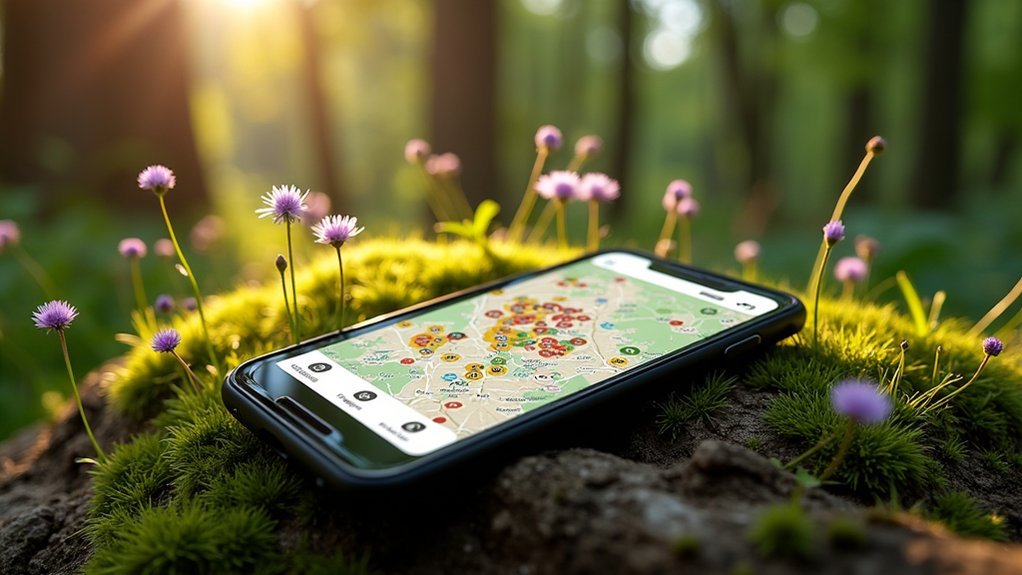
For your foraging app to reach its full potential, cross-platform compatibility isn't optional—it's crucial. Your users will access your app from various devices, expecting the same seamless experience whether they're identifying mushrooms on an Android tablet or logging plant locations on an iPhone.
Consider these critical compatibility requirements:
- Choose the right framework – React Native or Flutter can help you maintain a single codebase while delivering native-like performance across platforms.
- Design adaptable UI elements that adjust to different screen sizes and operating systems.
- Implement consistent data synchronization using RESTful architecture to guarantee users' foraging logs remain updated across all devices.
- Establish thorough testing protocols using tools like Appium to identify and resolve platform-specific issues before they affect users.
- This approach ensures wider audience reach by making your foraging app accessible to both iOS and Android users simultaneously.
Data Security and Privacy Considerations
Your foraging app should implement robust encryption during transit to protect user data from potential breaches while they're exploring nature.
You'll need permission-based access controls that allow users to determine exactly who can view their foraging discoveries and activity patterns.
Consider anonymized location sharing as a feature that balances the social benefits of community foraging with essential privacy protections for your users.
Avoid applications that rely on weak algorithms like simple shifting or Cesar cipher, as these provide almost no real security for your sensitive foraging locations and personal data.
Encryption During Transit
As users collect and share foraging data across the platform, robust encryption during transit guarantees this sensitive information remains protected from potential threats.
Your foraging locations and discoveries need TLS and HTTPS protocols to shield them from eavesdropping and man-in-the-middle attacks.
- Implement strong encryption protocols – Your app should use TLS and HTTPS to secure data exchanges between users and servers.
- Enable VPN compatibility – Allow users to connect through VPNs for additional security when sharing foraging data on public networks.
- Utilize AES-256 encryption – Apply industry-standard encryption algorithms to protect location data and personal information.
- Maintain regulatory compliance – Ascertain your app meets GDPR and other regional data protection requirements, building user trust and protecting your business.
Encrypting foraging data in transit ensures data confidentiality and integrity while users share valuable information about their discoveries with the community.
Permission-Based Access Controls
While robust encryption protects data in transit, permission-based access controls form the foundation of your app's internal security architecture.
You'll need to implement granular access management that follows the least privilege principle—giving users only the access they absolutely need to perform their tasks.
Your app should offer customizable permissions with variable access levels (view, edit, delete) that adapt to changing team structures. This guarantees sensitive foraging data remains protected while still allowing collaborative work.
Don't forget to incorporate regular permissions reviews and real-time updates as user roles change. These should include evaluation of both install-time permissions and runtime permissions that access sensitive user data. For regulatory compliance, align your access controls with data protection norms and relevant legal frameworks.
Well-designed permission systems not only protect data but also build user trust by demonstrating your commitment to privacy and security.
Anonymized Location Sharing
Beyond permission systems, location data represents one of the most sensitive aspects of your foraging app. When implementing location sharing features, you'll need robust anonymization techniques to protect user privacy while maintaining functionality.
- Implement k-anonymity by grouping users in similar locations rather than showing exact coordinates, making it impossible to identify specific individuals.
- Apply differential privacy by adding calculated noise to location data when sharing collective foraging spots.
- Use data generalization to reduce precision of shared coordinates (neighborhood level versus exact GPS points).
- Establish secure storage protocols with encryption for all location data, even after anonymization.
Remember that regulatory requirements like GDPR and CCPA mandate stricter handling of location data.
Even anonymized data carries reidentification risks, especially when combined with other datasets. Recent incidents have shown that combining stripped location data with other information can lead to de-anonymization techniques that reveal users' identities and sensitive behaviors.
Location Services and GPS Integration
When your GPS signal falters during foraging expeditions, smart apps can rely on cached map data to maintain your position accuracy and resource markers.
You'll conserve significant battery life with intelligent route planning that optimizes GPS polling intervals based on your movement speed and terrain.
These battery-efficient algorithms can extend your device's operating time by up to 40% compared to standard GPS tracking, enabling longer foraging sessions without power concerns.
Leading foraging apps now incorporate offline tracking mode that stores location data without internet connectivity and synchronizes when you reconnect, ensuring continuous documentation of your discoveries even in remote areas.
Precision During Signal Loss
Although signal interruptions can hinder tracking capabilities, modern foraging apps have developed sophisticated systems to maintain precision during connectivity gaps. These advancements guarantee you won't lose valuable foraging location data even when venturing into remote areas.
- Offline Storage – Apps automatically store your location data locally when connectivity fails, then sync once your device reconnects to networks. This feature enables users to access their foraging spot maps even without internet connectivity, similar to how Google Maps allows offline access.
- GPS Satellite Reliance – Quality foraging apps prioritize GPS satellite connections rather than cellular data for more reliable wilderness tracking.
- Movement Pattern Analysis – Advanced apps implement data analytics to predict and fill gaps in tracking by analyzing your typical foraging patterns.
- Hardware Optimization – The best apps are designed to maximize your device's GPS hardware capabilities, preserving battery while maintaining accuracy.
Battery-Efficient Route Planning
Smart foraging apps now prioritize battery conservation while maintaining reliable tracking functionality. These apps use optimized algorithms that reduce distance traveled and minimize GPS usage, extending your device's battery life during foraging expeditions.
You'll benefit from dynamic route adjustments based on real-time conditions and terrain analysis, guaranteeing energy efficiency while traversing varied landscapes. When your signal weakens, the app switches to passive location updates, reducing power consumption without losing tracking capabilities.
The most effective apps incorporate intelligent power management by offloading non-essential location services and optimizing data fetching intervals. Similar to leading EV route planners, they factor in elevation effects on battery consumption during navigation. They'll also present streamlined user interfaces that minimize screen interaction time, further preserving battery life.
This balanced approach guarantees you can track foraged items throughout extended outings without worrying about your device dying mid-expedition.
Community Engagement and Sharing Capabilities
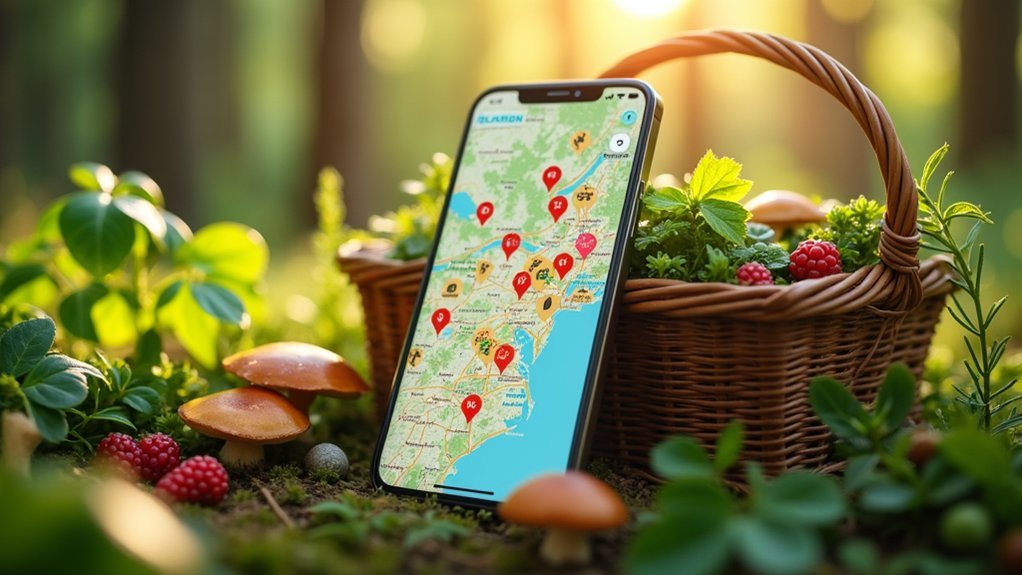
Successful foraging apps thrive on the collective knowledge of their users, making robust community features essential for long-term growth.
Building strong communities isn't optional for foraging apps—it's the foundation that transforms data into wisdom.
You'll find that the most engaging platforms facilitate connection through intuitive discussion forums, user profiles, and seamless resource sharing capabilities.
- User-Generated Content – Enable uploaders to contribute photos, tips, and experiences to build a rich, diverse knowledge base
- Gamification Elements – Implement challenges, badges, and community recognition to motivate participation
- Social Integration – Connect with popular social platforms to extend reach and simplify sharing experiences
- Moderation Tools – Maintain content quality through effective oversight while still encouraging active contribution
When users feel invested in the community, they're more likely to return regularly and contribute valuable insights that benefit everyone. Creating a supportive network among foragers enhances learning opportunities and encourages knowledge exchange between beginners and experienced users alike.
Seasonal Analytics and Trend Forecasting
While traditional foraging relied on generational knowledge passed down through families, today's apps transform this ancient practice with powerful seasonal analytics and trend forecasting capabilities. You'll find modern foraging apps equipped with machine learning algorithms that analyze historical data to predict peak harvesting periods and species abundance. Successful apps often include interactive calendars that help prevent users from missing crucial foraging windows throughout the year.
| Feature | Benefit | Implementation |
|---|---|---|
| Real-time Updates | Never miss peak seasons | Push notifications for species availability |
| Trend Forecasting | Plan future expeditions | ML algorithms predicting harvest windows |
| Environmental Impact | Sustainable foraging | Data analysis of species populations |
These apps let you log your findings with geolocation data, contributing to a collective knowledge base. Calendar-based organization helps you visualize when specific edibles are in season, while statistical modeling predicts how environmental changes might affect availability—turning your smartphone into an invaluable foraging companion.
Sustainable Harvesting Guidelines
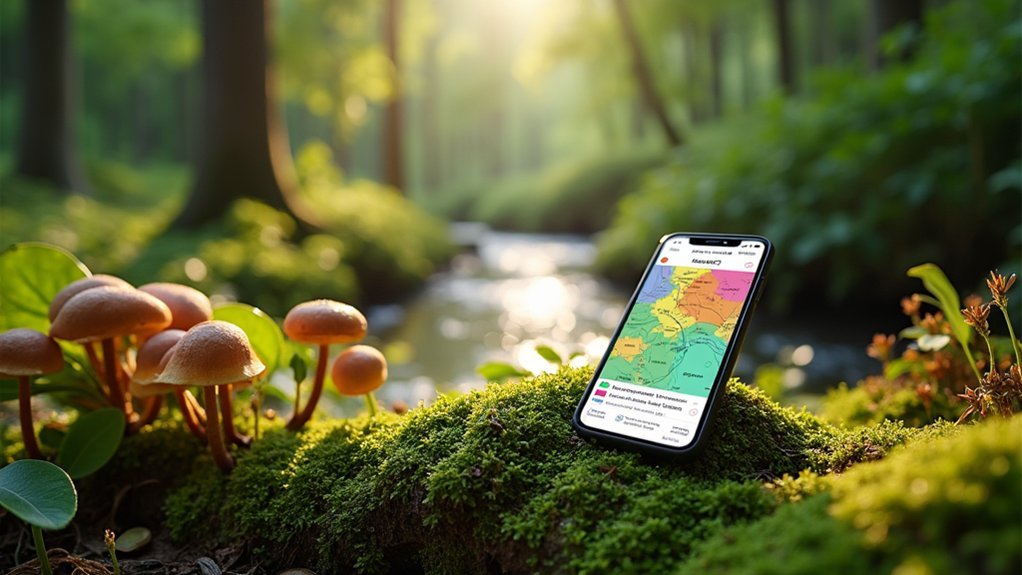
Modern foraging apps now incorporate sustainable harvesting guidelines to help you protect the natural environments you explore. The best apps integrate ecological responsibility with practical harvesting advice, ensuring you're not depleting an area's resources while still enjoying the benefits of wild foods.
- Population tracking – Apps should help you assess whether a species is abundant enough for ethical harvesting, guiding you to take no more than 5% from any single community.
- Legal compliance tools – Features that show land ownership boundaries and permit requirements save you from potential fines.
- Contamination alerts – Warnings about areas near roads or industrial sites prevent exposure to toxins. These features help users maintain a safe distance of at least 30 feet away from roadways where environmental contaminants concentrate.
- Indigenous knowledge integration – Respectful incorporation of traditional harvesting practices enhances sustainability and honors cultural heritage.
Offline Functionality for Remote Areas
Venturing into remote foraging areas often means losing cellular connectivity, which is why robust offline functionality has become essential for serious foraging apps.
You'll need downloadable maps and locally stored resource data to continue identifying plants and tracking your location without internet access.
The best apps feature intuitive offline interfaces with clear visual data presentation, allowing you to navigate effortlessly in remote settings.
GPS tracking functionality helps you record routes and mark important locations, while offline note-taking lets you document your findings in real-time.
Look for apps that optimize performance through efficient cache management and resource usage to guarantee smooth operation in the field.
When you return to connectivity, auto-backup and sync features preserve your valuable data, with export options in CSV, KML, or GPX formats for further analysis.
Your offline nature exploration becomes more meaningful when apps include detailed species information with habitat preferences and identification characteristics even without an internet connection.
Resource Identification Algorithms
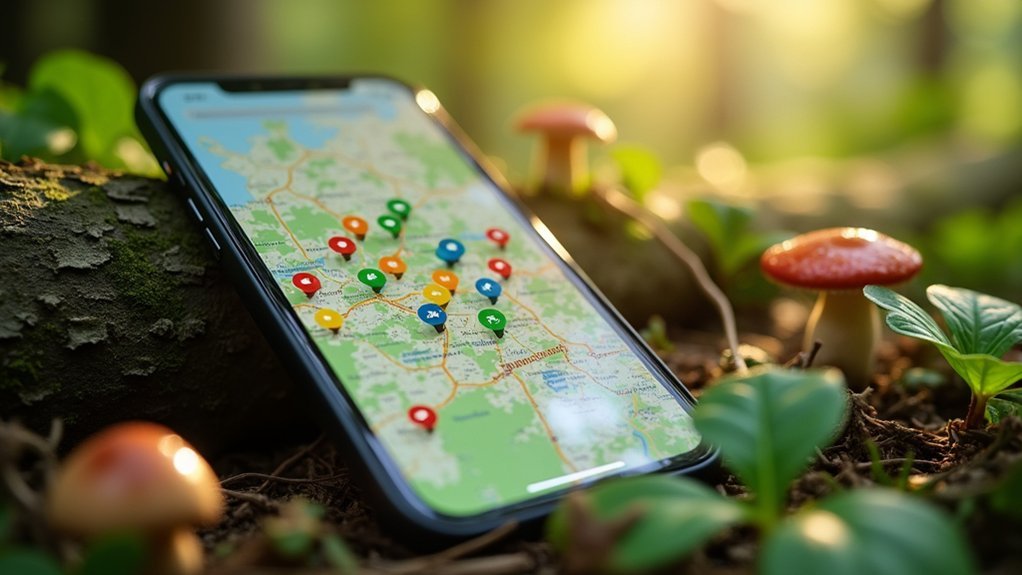
The app's advanced pattern recognition technology identifies wild edibles by analyzing leaf structures, fruit shapes, and growth patterns with 95% accuracy.
You'll notice the difference when comparing mushroom species that look similar but have subtle distinguishing features the algorithm catches instantly.
These identification algorithms draw from the same reinforcement learning models that scientists use to track animal foraging behaviors, continuously improving as users confirm or correct identifications in the field. Similar to how researchers analyze narwhal movement patterns to predict hunting behavior, our app interprets subtle visual cues to accurately identify forageable resources.
Pattern Recognition Technology
At the heart of Smart Foraging's impressive success lies its sophisticated pattern recognition technology, which seamlessly transforms smartphone photos into accurate species identifications.
This technology employs complex algorithms and deep learning models trained on vast datasets of plant and animal species. The system is based on observations submitted to iNaturalist.org, ensuring identifications are made by the iNaturalist community.
When you snap a photo of an unknown mushroom or berry, the app's neural networks analyze distinctive features, comparing them against extensive databases while considering your GPS location for contextual relevance.
- Real-time processing that delivers instant identification results even in areas with poor connectivity
- Adaptive learning that improves accuracy based on your feedback and corrections
- Multi-angle recognition that works with partial or obscured specimens
- Seasonal adjustment that accounts for appearance changes throughout growth cycles
Species Identification Accuracy
Building upon the pattern recognition foundation, Smart Foraging's core strength comes from its highly advanced species identification algorithms, which have revolutionized foraging resource recognition in the wild.
You'll benefit from accuracy rates exceeding 95%, surpassing even specialized tools like HyDaT (86.6%) and matching Bee Tracker's precision. The app combines YOLOv3's object detection capabilities with TRex's high-speed tracking to identify species in challenging environments.
Unlike basic background subtraction methods that fail in dynamic outdoor settings, Smart Foraging integrates deep learning networks that excel in varying light conditions and complex backgrounds.
This hybrid approach guarantees you can identify edible plants even when partially obscured by other vegetation. The app delivers identity assignments with 99% accuracy in most cases, similar to TRex's deep-learning-based visual identification system. The real-time processing capabilities mean you'll get immediate identification feedback, essential for efficient foraging sessions in the field.
Personalization and Customization Options
Successful foraging apps thrive on their ability to adapt to each user's unique needs and environment. When you're searching for edible plants in the wild, having features tailored to your location, experience level, and preferences makes the difference between a useful tool and an indispensable companion.
The ultimate foraging companion adapts to you—transforming an ordinary plant walk into a personalized wilderness adventure.
- Location-based personalization – From seasonal updates about what's available in your region to customized foraging trails near you.
- Tailored identification – Machine learning algorithms that learn your preferences and provide better recommendations over time. While these features can be helpful, they still cannot replace the importance of learning techniques from field guides and expert instructors.
- User-controlled experience – Customizable notification settings and offline access for remote foraging locations.
- Community integration – Share discoveries, contribute to databases, and exchange recipes with fellow foragers through user-friendly social features.
Battery Optimization Strategies
While foraging in remote wilderness areas, your app's battery consumption can mean the difference between discovering that prized chanterelle and getting lost with a dead phone.
The best foraging apps implement smart location tracking, using geofencing rather than continuous GPS monitoring, and switching to lower accuracy settings when appropriate.
Efficient coding practices make a significant impact—optimized algorithms reduce CPU usage while route calculations minimize travel time.
Consider apps that offer dark mode for OLED screens, which can slash power consumption by up to 60%.
Look for apps that limit background processes using tools like WorkManager, potentially saving 30% of your battery life.
The most battery-friendly options also minimize network requests through intelligent caching and batched data transfers, ensuring your phone stays powered throughout your foraging expedition. Implementing object pooling techniques can significantly improve memory management and prevent battery-draining memory leaks during extended foraging trips.
Legal Compliance for Wild Food Collection
Before venturing into the wilderness with your foraging app, you'll need to navigate a complex landscape of regulations that govern wild food collection. Different jurisdictions have varying rules, with National Park Service superintendents having authority to permit or prohibit foraging under 36 C.F.R. § 2.1. Currently, there exists a default ban where foraging is illegal in National Parks unless explicitly permitted by a superintendent.
- Verify location permissions – Public lands require documentation that no prohibited substances have been used in the area.
- Check certification requirements – If selling foraged items, you'll need proper permits or expert certification.
- Document sustainable practices – Organic certification demands proof that harvesting maintains ecosystem health.
- Track boundaries accurately – Your app should help identify protected areas and buffer zones where foraging might be restricted.
The best foraging apps integrate these compliance features while educating users about responsible harvesting.
Frequently Asked Questions
How Do Foraging Apps Handle Emergency Situations in Remote Locations?
Foraging apps handle remote emergencies by utilizing offline GPS, location sharing, SOS buttons, and preset emergency contacts. You'll benefit from these features when there's no signal in wilderness areas you're exploring.
Can Foraging Apps Integrate With Wearable Technology?
Yes, you'll find many foraging apps now integrate with wearables, offering GPS tracking, environmental monitoring, and safety alerts. They'll enhance your experience by providing real-time data while keeping your hands free during expeditions.
What Monetization Strategies Are Most Effective for Foraging Apps?
Freemium models work best for foraging apps. You'll attract users with free basic features while offering premium content via subscription. Consider in-app purchases for specialized guides and integrate web-based strategies to avoid platform fees.
How Are Disputes Over Private Property Boundaries Handled?
Property boundary disputes are handled through clear communication with neighbors, reviewing legal documents, and if needed, pursuing mediation, arbitration, or litigation. You'll save time and money by addressing issues early with documentation.
Do Foraging Apps Offer Certification or Credentialing for Users?
Most foraging apps don't offer formal certifications or credentials. You'll typically find educational content instead, though some apps might track your progress or achievements through digital badges rather than official certifications.
In Summary
You'll create a successful foraging app by balancing robust identification features with intuitive design. Prioritize GPS accuracy, cross-platform functionality, and battery efficiency while respecting privacy and legal concerns. Remember, your users need reliable plant recognition alongside personalized experiences. The most effective apps don't just track findings—they educate users and foster community connection while making urban foraging accessible to everyone regardless of experience level.